Tape Mod vs PE Foam Mod: Which Gives a Deeper Marble Sound?
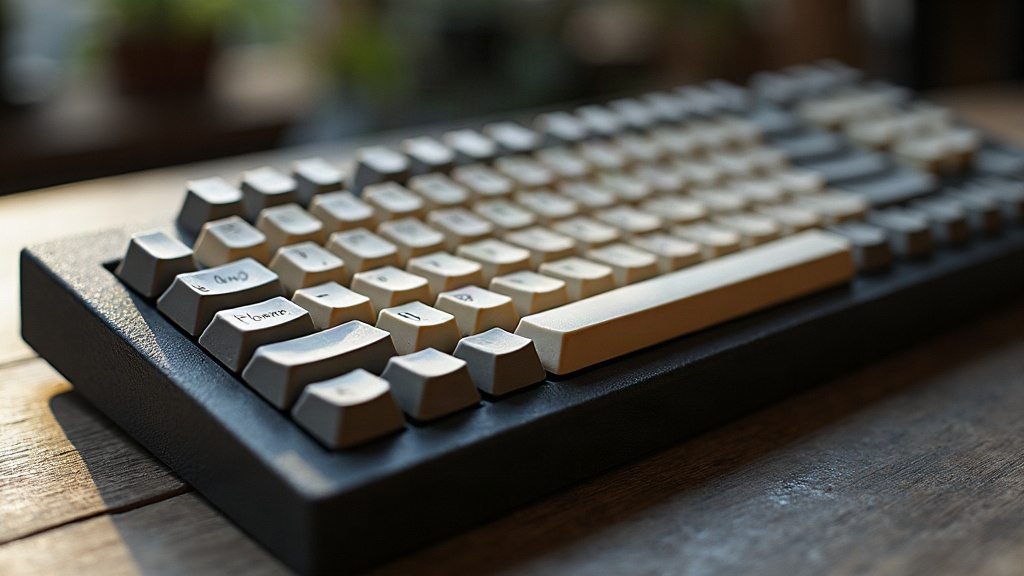
If you’re chasing that deep, rounded “marble” sound profile (the low-pitched, clacky-but-controlled tone popular in high-end custom keyboard builds), the two most common entry points are the tape mod and the PE foam mod. Both dampen PCB resonance and cut down on hollow pinging, but they don’t do it the same way. One trims the highs, the other fills the void. This guide breaks down what each mod actually does, how to apply them without wrecking your board, and which combination actually gets you that signature marble clack.
What Is the “Marble Sound” Profile?
Picture two marbles tapping together. That’s the target: a deep, dense, slightly muted click, thock without turning muddy, clack without going sharp or pingy. It sits at the opposite end of the spectrum from a thin, hollow, “tinny” board that sounds like you’re typing on a biscuit tin. Getting there usually means dealing with resonance at three separate layers: the PCB itself, the case cavity, and the switches and stabilizers doing the actual work.
Tape Mod: The Basics
The tape mod means sticking layers of tape (painter’s tape, washi tape, electrical tape, take your pick) onto the back of the PCB, right under the switches.
How it works:
- Tape dampens PCB vibration, cutting the “ping” that comes off an unmuted circuit board.
- Stack a few layers (1 to 3 is typical) and the sound gets progressively deeper and softer.
- It’s cheap, fully reversible, and takes maybe 10 to 20 minutes per board, less if you’ve done it before.
Pros:
- Costs next to nothing. A single roll of painter’s tape from the hardware store will do five boards.
- Easy to peel off and redo if the result isn’t what you wanted.
- Cuts that high-pitched PCB ping noticeably.
Cons:
- Doesn’t touch overall case resonance much.
- Past 2 or 3 layers you hit diminishing returns, and can actually start muffling the sound instead of improving it.
- On its own it doesn’t add real low-end depth. It mostly just strips away unwanted high frequencies.
PE Foam Mod: The Basics
PE (polyethylene) foam mod means slotting a thin sheet of foam between the PCB and the plate, or between the PCB and the case bottom, to fill the air gaps and soak up vibration across the whole cavity.
How it works:
- Foam fills the empty space inside the case, which is exactly where hollow reverberation likes to live.
- It works on the entire acoustic chamber, not just the PCB surface like tape does.
- Thickness matters here. 2mm to 5mm sheets are the norm, depending on how much clearance your case allows.
Pros:
- Deepens the sound in a more holistic way by killing case echo.
- Adds a real, noticeable low-end “thock.”
- Plays nicely with other dampening materials like silicone or poron.
Cons:
- You’ll need to cut it precisely to match your case and PCB layout; sloppy cuts mean gaps, and gaps mean the mod half-works.
- Overdo the foam and you deaden the sound entirely, flattening out the clack until the board feels lifeless.
- Takes a bit more setup time than slapping on tape.
Tape Mod vs PE Foam Mod: Direct Comparison
| Factor | Tape Mod | PE Foam Mod |
|---|---|---|
| Targets | PCB surface ping | Whole case resonance |
| Cost | Very low | Low-moderate |
| Difficulty | Easy | Moderate (cutting required) |
| Sound effect | Reduces high-pitch ping | Deepens low-end, reduces hollowness |
| Reversibility | High | Moderate |
| Best for | Pingy/tinny boards | Hollow/echoey boards |
Which One Gives the Deeper Marble Sound?
Got a board that sounds sharp and pingy, almost tinny when you type fast? Start with the tape mod. It’s the quickest fix for that kind of high-frequency resonance. But if your board sounds hollow or empty no matter which switches you throw at it, the PE foam mod is doing the real heavy lifting toward that deep, marble-like body.
For the truest marble profile, most builders don’t pick one, they run both:
- Apply 1-2 layers of tape to the PCB back to kill the ping.
- Slide a PE foam sheet between PCB and plate (or PCB and case) to knock out case hollowness.
- Pair all of it with lubed switches and stabilizers. Unlubed stabs will rattle and undo every bit of acoustic work you just did.
Common Mistakes to Avoid
- Over-taping: Go past 3 layers and you’re often muffling the sound rather than deepening it.
- Foam too thick: Compress the switches or plate mounting too much and you’ll start feeling it in your typing, not just hearing it.
- Skipping switch lube: No amount of PCB or case damping fixes a scratchy, unlubed switch. That’s a separate problem.
- Ignoring stabilizers: One rattly stabilizer can dominate the entire sound signature, mods or no mods.
Final Thoughts
Neither mod on its own guarantees a perfect marble sound. They’re aimed at different sources of resonance. Tape mod is your fast, reversible fix for a pingy PCB. PE foam mod handles the deeper case hollowness that gives you that rounded low-end thock. Layer both together, then finish with proper switch and stabilizer lube, and that combination (more than any single tweak) is what actually gets you close to the deep, satisfying marble clack enthusiasts keep chasing.