Aluminum vs Brass vs Carbon Fiber Switch Plates: Flex & Sound
Choosing between aluminum, brass, and carbon fiber switch plates really comes down to one trade-off: stiffness versus flex, and how that trade-off shapes the sound and feel under your fingers. Aluminum sits in the middle, a dependable all-rounder. Brass gives you a dense, high-pitched “thocky” sound with barely any give. Carbon fiber flexes more, softening the typing experience into something warmer and quieter. Here’s what each one actually does once it’s bolted in under your switches.
Why Plate Material Matters
The switch plate sits between your PCB and your keycaps, clamping each switch in place. It shapes your build in three main ways:
- Flex: how much the plate bends under keypress force, which affects how soft or firm a press feels.
- Acoustics: how sound waves travel and get absorbed (or not) through the material.
- Stability: stiffer plates cut down on switch wobble, though they can feel harsher in the process.
Density, rigidity, and thickness all interact with your case, your foam choices, and even your switch type. Swap one variable and the whole sound signature can shift.
Aluminum Switch Plates
Aluminum is the go-to aftermarket plate, and honestly, it earned that spot.
Flex: Moderate. Aluminum plates (usually 1.2mm to 1.5mm thick) have a bit of give, more noticeable on larger boards like 75% or TKL layouts, but nowhere near what you’d get from carbon fiber or polycarbonate.
Acoustics: Clean, slightly bright, with that classic “clacky” edge and good switch definition. It’s less resonant than brass, so it won’t ring out metallically unless your case is missing dampening foam.
Best for: Anyone who wants a crisp, consistent sound without chasing extremes of softness or harshness. It’s also the easiest plate to find and the most wallet-friendly option once you step up from stock.
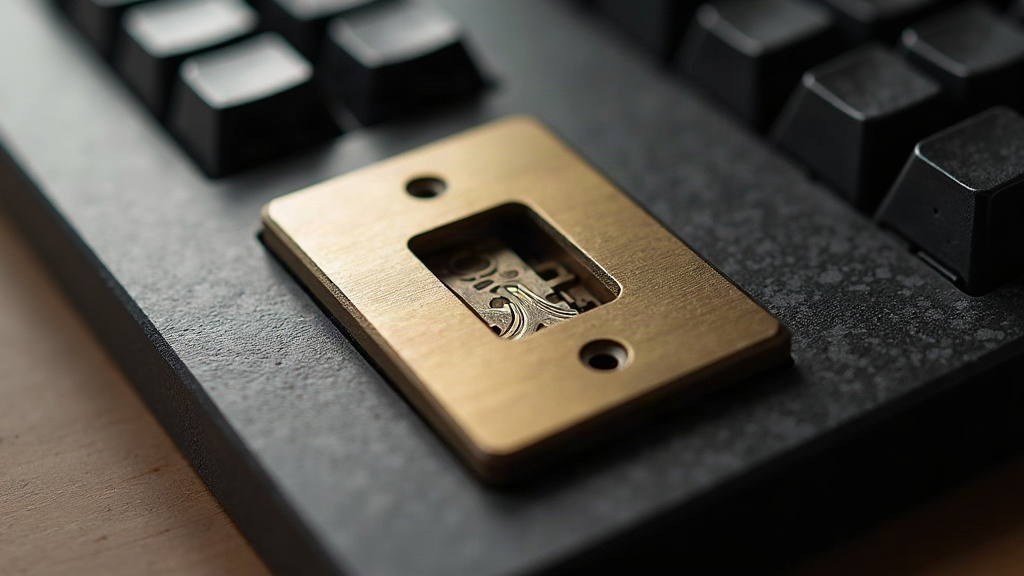
Brass Switch Plates
Brass is the heavyweight champion here, and the enthusiast crowd loves it for one specific reason: that tonal signature.
Flex: Minimal to none. Brass is dense and stiff enough that keypresses land firm and direct, with almost no cushioning when you bottom out.
Acoustics: This is the material behind that deep, high-pitched “thock” everyone on keyboard forums chases. Brass transmits vibration so efficiently that it amplifies everything, including your switches and stabilizers. Translation: poorly lubed stabilizers will sound worse on brass, not better. There’s nowhere to hide sloppy prep work.
Best for: Builders after a signature high-end sound who don’t mind a firmer, less forgiving feel underfoot (or under finger, rather). One thing to factor in: brass adds real weight, sometimes 200g or more compared to an aluminum plate of the same size.
Carbon Fiber Switch Plates
Carbon fiber flips the priority list. Comfort first, rigidity second.
Flex: High. It bends more than aluminum or brass, producing a cushioned, almost springy bottom-out that’s easier on your fingers during marathon typing sessions (think 6+ hours at a desk).
Acoustics: Warmer, more muted, with a “poppy” quality and much less high-frequency ring. Carbon fiber naturally absorbs resonance, which is exactly why a lot of flex-cut or budget builds pair it with little to no foam, the material’s already doing that job.
Best for: Typists who’d rather have a soft, quiet feel than a loud, sharp one. It’s also lighter than either metal option, which matters if you’re building something you plan to carry around.
Quick Comparison Table
| Material | Flex | Sound Profile | Weight | Typical Price |
|---|---|---|---|---|
| Aluminum | Moderate | Bright, clacky | Medium | $$ |
| Brass | Minimal | Deep, thocky | Heavy | $$$ |
| Carbon Fiber | High | Warm, muted | Light | $$–$$$ |
How to Decide
Before you buy, sit with these four questions for a minute:
- Louder or quieter board? Brass cranks up the volume and resonance; carbon fiber dials it down.
- Do you type for hours at a stretch? Carbon fiber’s flex takes some of the edge off, which matters more than people expect once you’re three hours into a writing session.
- Chasing that trendy “thock”? Brass still owns that specific sound, full stop.
- Is portability a factor? Carbon fiber wins on weight easily; brass is the heaviest option by a wide margin.
Don’t forget your case material and foam choices either. A soft carbon fiber plate inside a polycarbonate case sounds nothing like that same plate dropped into an aluminum case with foam lining. The build behaves as one system, not a pile of separate parts you can judge individually.
Conclusion
There’s no single “best” plate material, just the best match for what you actually want. Aluminum is the safe, versatile default. Brass is for builders chasing that signature deep thock who don’t mind the extra firmness and weight that comes with it. Carbon fiber suits anyone after a flexier, quieter, more forgiving typing feel. Match the plate to your switches, your case, and your sound goals, and the final build will feel like a deliberate choice, not an afterthought.